
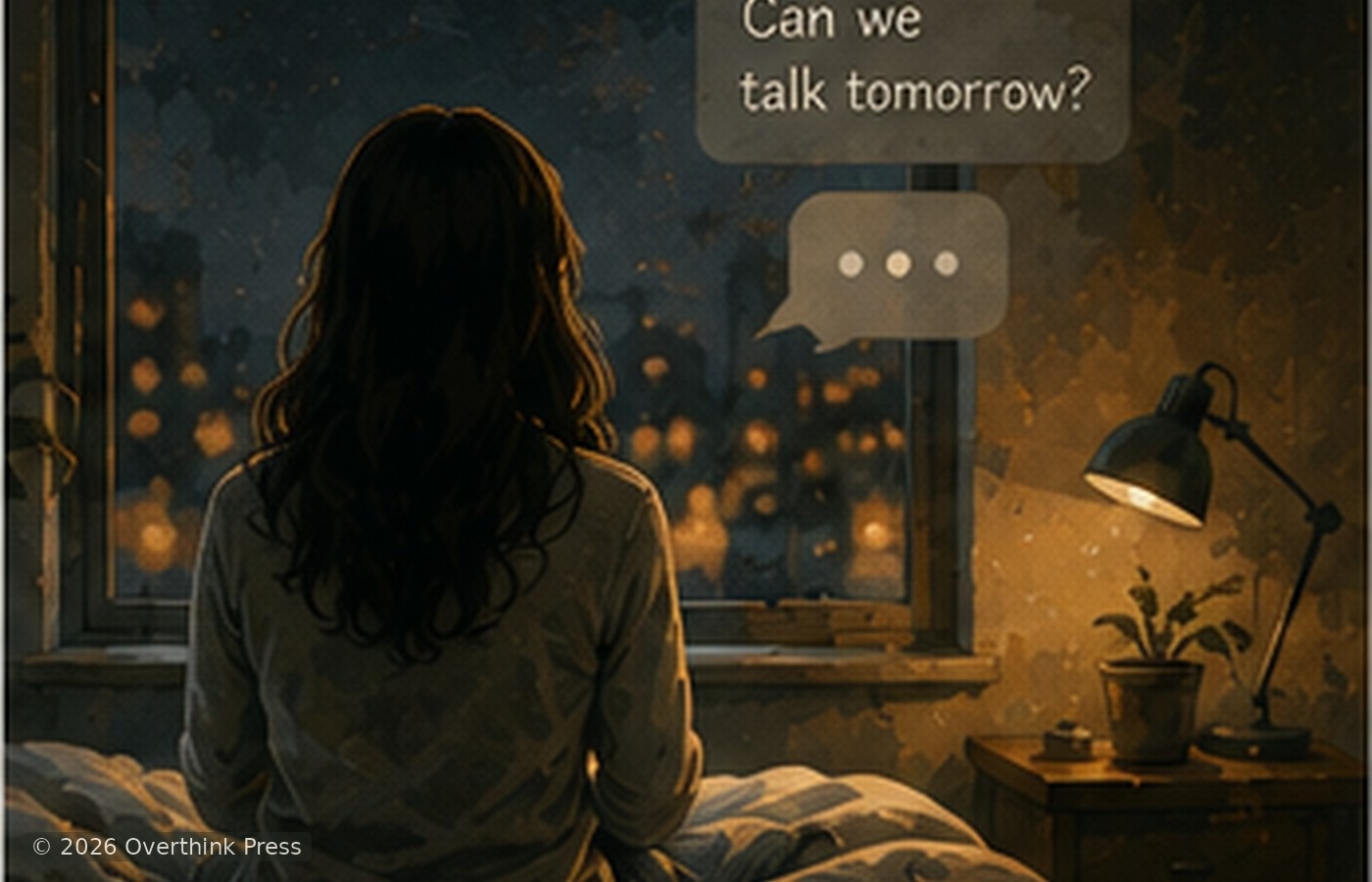
“No worries,” I typed.
It was the third time I had used the phrase that morning.
The first was when someone moved a deadline forward by two days.
The second was when a friend asked whether I could help with something over the weekend.
The third was in response to a message that began with, “I know you’re busy, but…”
I was busy.
This information apparently had not prevented the request from completing its journey.
“No worries,” I typed anyway.
It is a convenient phrase.
Friendly.
Efficient.
Socially approved.
It communicates that I am calm, flexible, generous, and not remotely affected by the additional responsibility now climbing onto my back with several pieces of luggage.
No worries.
The official slogan of people carrying many worries.
I had become the dependable one gradually.
There was no ceremony.
No one handed me a certificate.
I simply started remembering things other people forgot.
I checked the details.
I brought the extra supplies.
I followed up.
I made sure everyone arrived safely.
I learned how to detect a problem while it was still quietly considering becoming a problem.
People appreciated it.
Being needed felt meaningful.
It also became part of my identity.
If I was helpful, I was valuable.
If I was easy to work with, people would keep me around.
If I never complained, no one could accuse me of being difficult.
So I said yes.
Yes, I could take care of it.
Yes, I could adjust.
Yes, I could squeeze it in.
Yes, I understood.
Yes, no worries.
The worries did not disappear. They changed location.
They moved into my shoulders.
They woke me up at 3:00 in the morning.
They sat beside me while I calculated how to fit twelve hours of responsibility into six available hours.
They followed me into conversations where I smiled, listened, and secretly wondered how everyone else had become so comfortable handing me pieces of their lives.
By Wednesday, my schedule had no open space.
Every hour belonged to someone.
Work requests.
Family responsibilities.
Messages that needed thoughtful replies.
Appointments.
Errands.
A favor I had agreed to perform before checking whether I had the time, energy, materials, transportation, or emotional stability required to perform it.
Then another request arrived.
“Could you take this on? You’re so good at these things.”
There it was.
The compliment attached to the task.
A small emotional gift basket delivered with additional labor.
My fingers moved toward the familiar answer.
No worries.
But there were worries.
There were, at minimum, several medium worries and one very organized concern holding a spreadsheet.
I stopped typing.
I asked myself what would happen if I told the truth.
Would they think I was unhelpful?
Would they become disappointed?
Would they decide I had changed?
The honest answer was that they might.
Boundaries do not guarantee that everyone remains pleased with you.
That is why pleasing people feels safer in the moment. You exchange your future energy for immediate approval.
I looked at the request again and wrote:
“I can help, but I won’t be able to complete it by Friday. I can have it ready next Wednesday, or we may need to involve someone else.”
I read the message.
It sounded reasonable.
My nervous system thought it sounded like a declaration of war.
I sent it.
Then I placed my phone facedown as though it contained an explosive device.
The response came a few minutes later.
“Wednesday works. Thanks for letting me know.”
No one collapsed.
No relationship ended.
No emergency meeting was called to discuss my sudden refusal to be infinitely available.
The world continued.
But something had changed.
I had answered the actual question.
The actual question was not, “Are you a good person?”
It was, “Can you complete this by Friday?”
The truthful answer was no.
That afternoon, I noticed how often I used “no worries” to prevent other people from feeling uncomfortable.
Someone apologized for being late.
No worries.
Someone added work without asking.
No worries.
Someone changed plans after I had rearranged my day.
No worries.
Sometimes there truly were no worries.
Sometimes the phrase was kindness.
But sometimes I was erasing myself in the name of politeness.
The truth did not need to be dramatic.
“I can help, but not today.”
“I need more information before I commit.”
“This is a bigger lift than it sounds.”
“I’m at capacity.”
“I care, but I cannot carry this alone.”
These sentences did not make me cold.
They made my help more honest.
Being dependable does not mean being permanently available.
Caring for people does not require pretending their requests have no impact on you.
You can be kind without becoming convenient at your own expense.
You can support others without silently assigning yourself every supporting role.
And sometimes, instead of “no worries,” the healthiest answer is:
“There are a few worries. Let’s talk about what is realistic.”
Small prompt: Where did I say “no worries” when I meant “I need support”?