
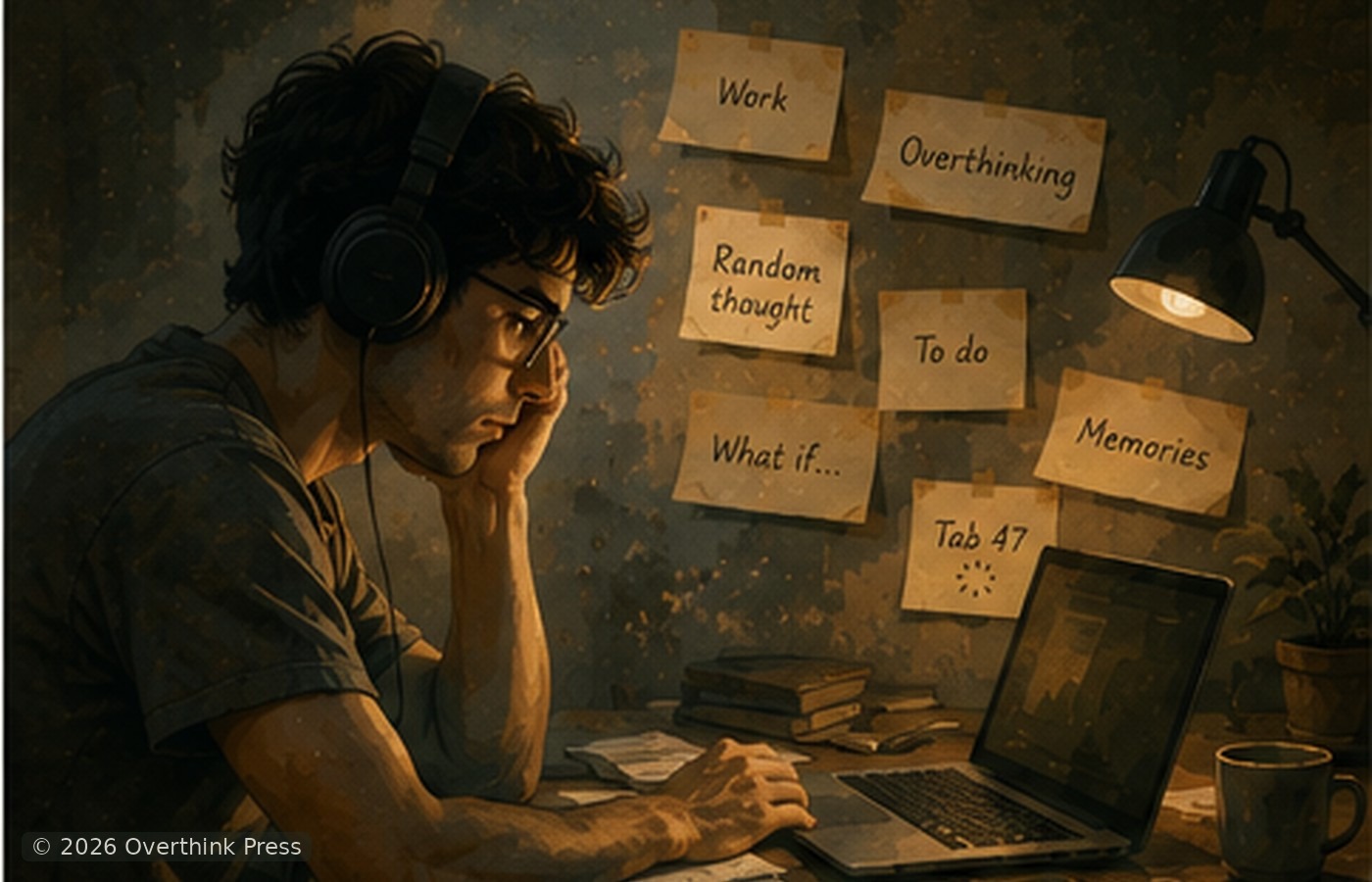
I walked into the kitchen to refill my water.
That was the mission.
A simple assignment with one measurable outcome: leave room with empty glass, return with full glass.
Instead, I noticed a package on the counter.
The package reminded me that I needed to return something.
The return reminded me that I had not printed the label.
The printer reminded me that it was almost out of ink.
The ink reminded me that I needed to order office supplies.
I picked up my phone.
Unfortunately, my phone contained notifications.
Seven minutes later, I was reading about a restaurant in a city I had no plans to visit while still holding the empty glass.
This is how my brain sometimes works.
One tab is trying to complete the original task.
One tab is remembering a bill.
One tab is replaying a conversation from Tuesday.
One tab is designing an imaginary business that has already expanded internationally despite not technically existing.
One tab is wondering whether I should reorganize the closet.
There is also music playing from somewhere, but no one knows which tab.
I returned to my desk without water and looked at the document I had planned to finish that morning.
The title was there.
The cursor blinked beneath it with the quiet judgment of someone who had arrived on time and was disappointed by my lack of preparation.
I typed one sentence.
Then I remembered an email.
I opened the email but noticed another message marked urgent.
It was not urgent.
It had been marked urgent by someone who believes urgency is a font choice.
I answered it anyway.
Then I saw a calendar reminder for an appointment next week. I checked the address. The address led me to a map. The map showed nearby coffee shops. One coffee shop had unusual chairs. I wanted to know where the chairs came from.
At 11:20, I knew a surprising amount about commercial seating and very little about the paragraph I was supposed to be writing.
From the outside, this kind of day can look like laziness.
It can look like poor discipline or a lack of motivation.
But I was not doing nothing.
I was doing too many unfinished things.
My attention had a hundred tiny hands, and every one of them was pointing at something that felt important.
The bill was important.
The email was important.
The return was important.
The project was important.
Drinking water was apparently less important, judging by the glass still sitting beside me like a witness.
The problem was not that I did not care.
I cared about everything at the same volume.
By noon, I felt exhausted and embarrassed.
I had been busy for hours. I could not explain what I had completed.
That is one of the hardest parts of a scattered day: you expend real energy without receiving the satisfaction of a finished result.
There are pieces everywhere.
A drafted message.
A partly created folder.
Three browser searches.
A laundry basket moved from one room to another without being emptied.
Evidence of motion, but no feeling of arrival.
My first instinct was to become stricter with myself.
Sit down.
Focus.
Why is this so difficult?
Other people can finish things.
These statements did not help. They only added another tab, the tab where I monitored myself failing to focus.
So I closed the document.
Not forever. Just long enough to stop fighting the entire day at once.
I took a sheet of paper and wrote down everything circling my mind.
Return package.
Pay bill.
Order ink.
Answer email.
Finish paragraph.
Book appointment.
Drink water, apparently.
I did not organize the list beautifully. I did not assign categories, colors, priorities, estimated completion times, or inspirational stickers.
I gave my brain somewhere to put the noise.
Then I chose one action that could be seen and completed.
Not “finish the project.”
Open the document and write three imperfect sentences.
Not “fix the house.”
Put the dishes in the sink.
Not “get my life together.”
Fill the glass with water.
I completed the smallest task first.
Then another.
The day did not suddenly become a productivity montage. I did not transform into a person who alphabetizes spices for pleasure.
My mind still wandered.
The difference was that I stopped demanding that it hold everything at once.
Some days, focus does not come from trying harder. It comes from reducing the number of decisions standing between you and the next movement.
Open the file.
Write the heading.
Place the item by the door.
Send the reply in two lines.
Small is not meaningless.
Small is how a frozen brain begins moving again.
That afternoon, I finished the paragraph.
Not the entire document. Not the week. Not my whole life.
One paragraph.
And for once, that was allowed to count.
Small prompt: What is one tab I can close today, even temporarily?