
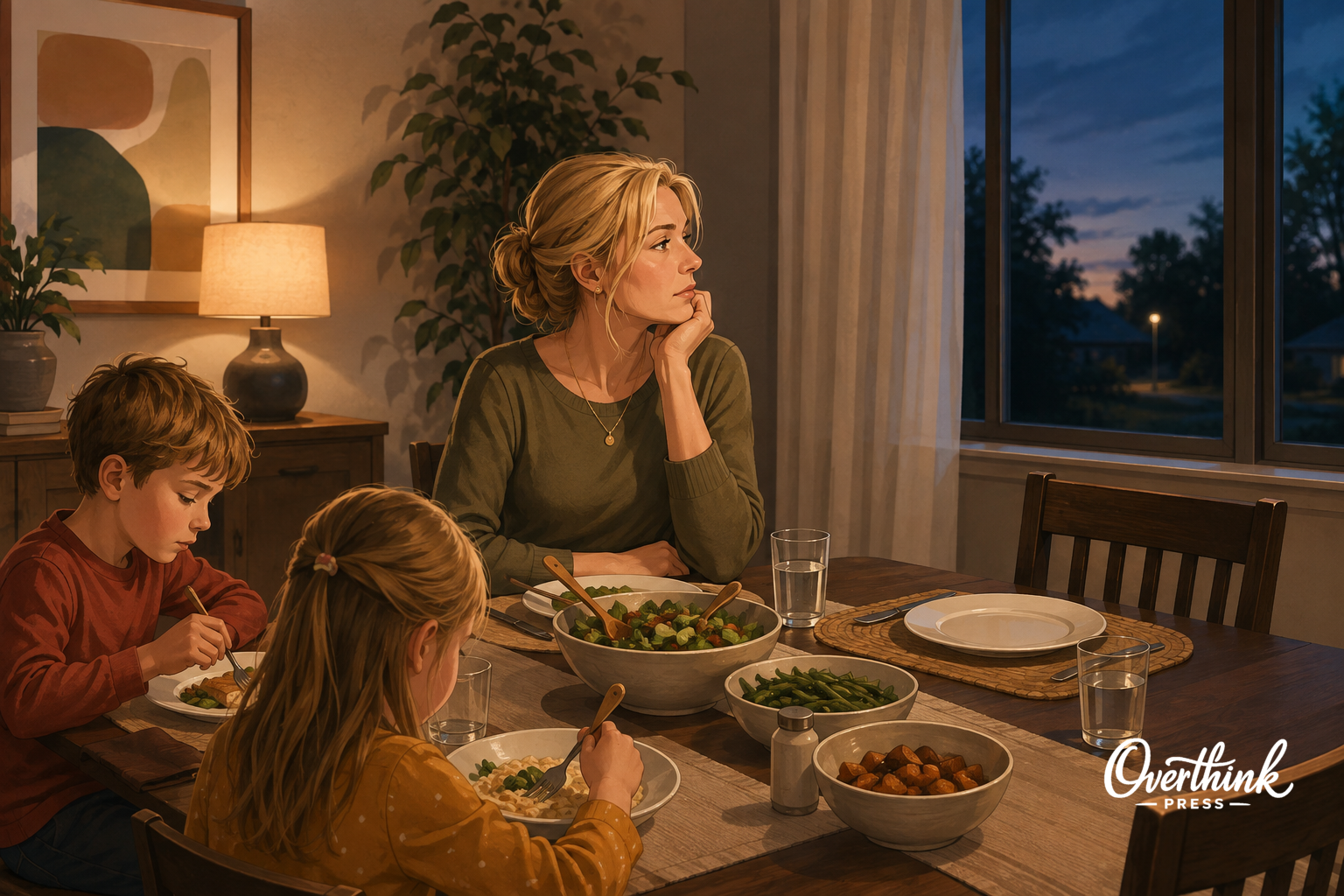
Dinner was ready at 6:30. I made the chicken the way he liked it, with extra garlic and the crispy edges he always stole from the serving plate before sitting down. The kids were already at the table. “Is Dad coming?” “He said he’d try.” It was the same answer I had given them on Monday. And Wednesday.
And the Friday before that. At 6:47, I checked my phone. No message. At 7:03, I sent one. Are you on your way? It was delivered but unread. “Can we eat now?” my daughter asked. I looked at the food. Then at the empty chair. Then at the clock, as if one of them might explain what was happening.
“Let’s give him five more minutes.” The kids groaned. They had stopped believing in my five minutes a long time ago. At 7:20, we started without him. The children talked about school while I smiled, nodded, and moved food around my plate. Part of me was listening. The rest of me was conducting an investigation with no evidence.
Was he still at work? Was he avoiding coming home? Was something wrong between us that I had somehow failed to notice? Was there someone else? Anxiety is very efficient. Give it one empty chair and it will furnish an entire second life. At 8:11, my phone finally lit up. Sorry. Long day. I already ate with the team.
I stared at the message. He had eaten. That should have been reassuring. Instead, it made me angrier. I had spent the evening keeping his dinner warm while imagining car accidents, work emergencies, and the quiet collapse of our marriage. Meanwhile, he had eaten noodles with his coworkers and forgotten to tell me. When he came home, I did not ask whether he liked the noodles.
I asked the question I had been swallowing for weeks. “Why don’t you want to have dinner with us anymore?” He looked surprised. He said it was not that he did not want to. Work had become overwhelming, and he thought telling me every time would only make me worry. I almost laughed. His plan to prevent me from worrying had been to disappear repeatedly without explanation.
We did not solve everything that night. But we agreed on one thing: if he would be late, he would tell me before dinner—not after my mind had already filed for emotional bankruptcy.
Grounding thought: Silence leaves space for anxiety to invent an explanation. The explanation may be wrong, but the pattern still deserves an honest conversation.