
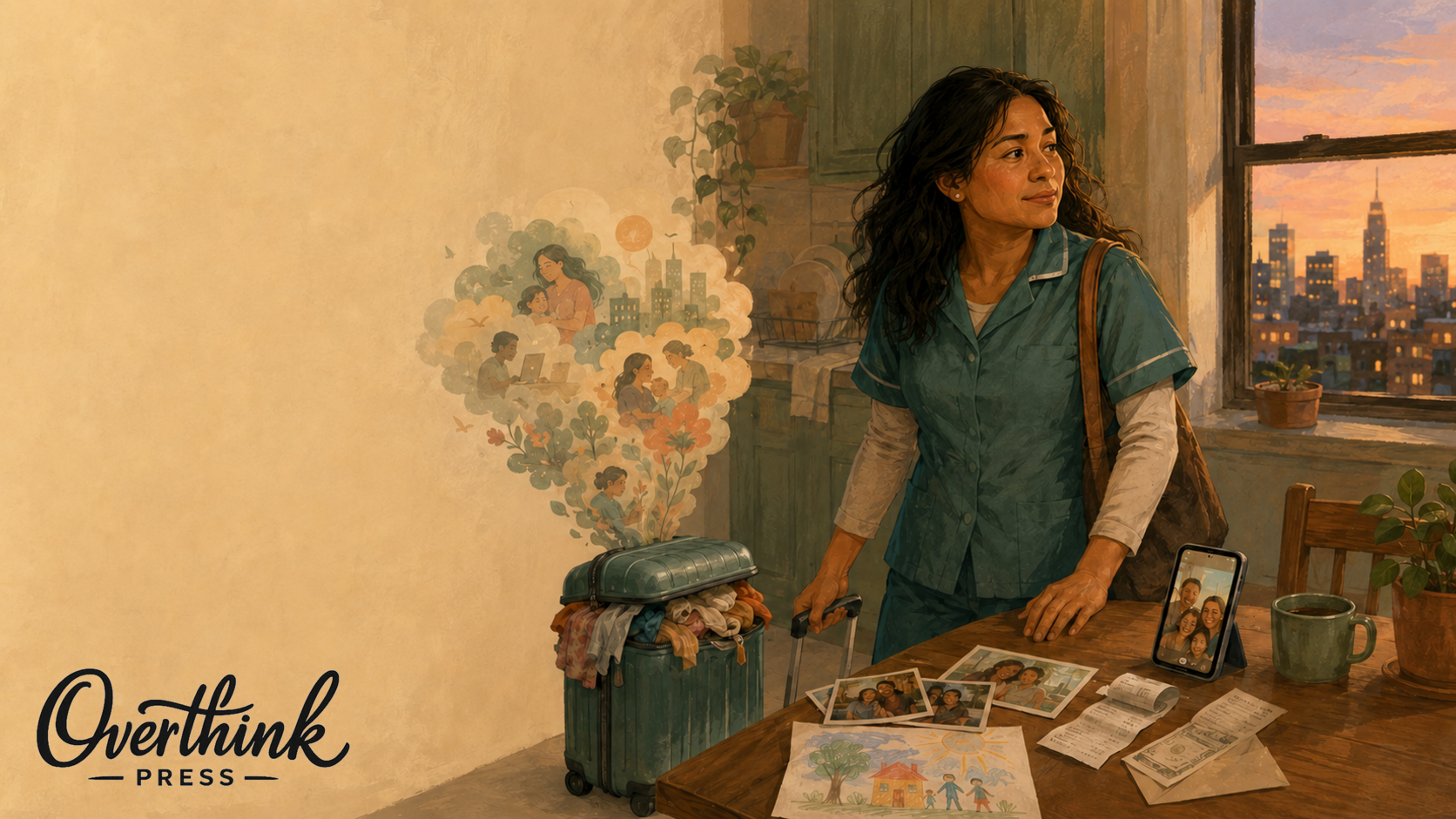
People often tell immigrant stories as if they begin with a plane ticket and end with a triumphant photograph. The suitcase was small, but the expectations inside could have required checked baggage. There was hope, certainly. There were also forms, unfamiliar streets, and the quiet question of whether the money would last until Friday.
Leaving home can look brave from a distance. Up close, it often looks like a person learning new systems, new expressions, and the international art of smiling through a meeting understood only sixty percent. It looks like studying a map on the bus, practicing a name before saying it aloud, and finding out that every country has its own way of making a simple task unexpectedly complicated.
“I am fine” can mean instant noodles, a bathroom cry, and showing up for work the next morning.
Families usually receive the photographs. They see the first apartment, the new coat, the birthday cake, and the smile carefully placed in the frame. They do not always see the bank account doing emotional gymnastics. They may not see the second job, the missed sleep, or the way a person learns to turn worry into a practical list.
Still, immigrant life is not only a story of sacrifice. It is also a story of contribution. People open shops, care for children, repair homes, teach, cook, build, organize, and make neighborhoods feel more like neighborhoods. They bring humor with them too, because a new place can be confusing and somebody has to say what everyone is thinking.
Hope is powerful, but it still needs a paycheck attached to it. It needs a safe home, a fair chance, a school that sees the child in front of it, and a community willing to understand that belonging is not a reward for perfect pronunciation or flawless paperwork.
The immigrant story is not one story. It is many stories held together by movement, memory, work, and the stubborn decision to keep building a life. The people inside those stories deserve to be seen as people, not as slogans, statistics, or political arguments.
They are here. They are making dinner. They are sending money home. They are laughing at a joke that did not translate well. They are finding their way, one ordinary day at a time.