
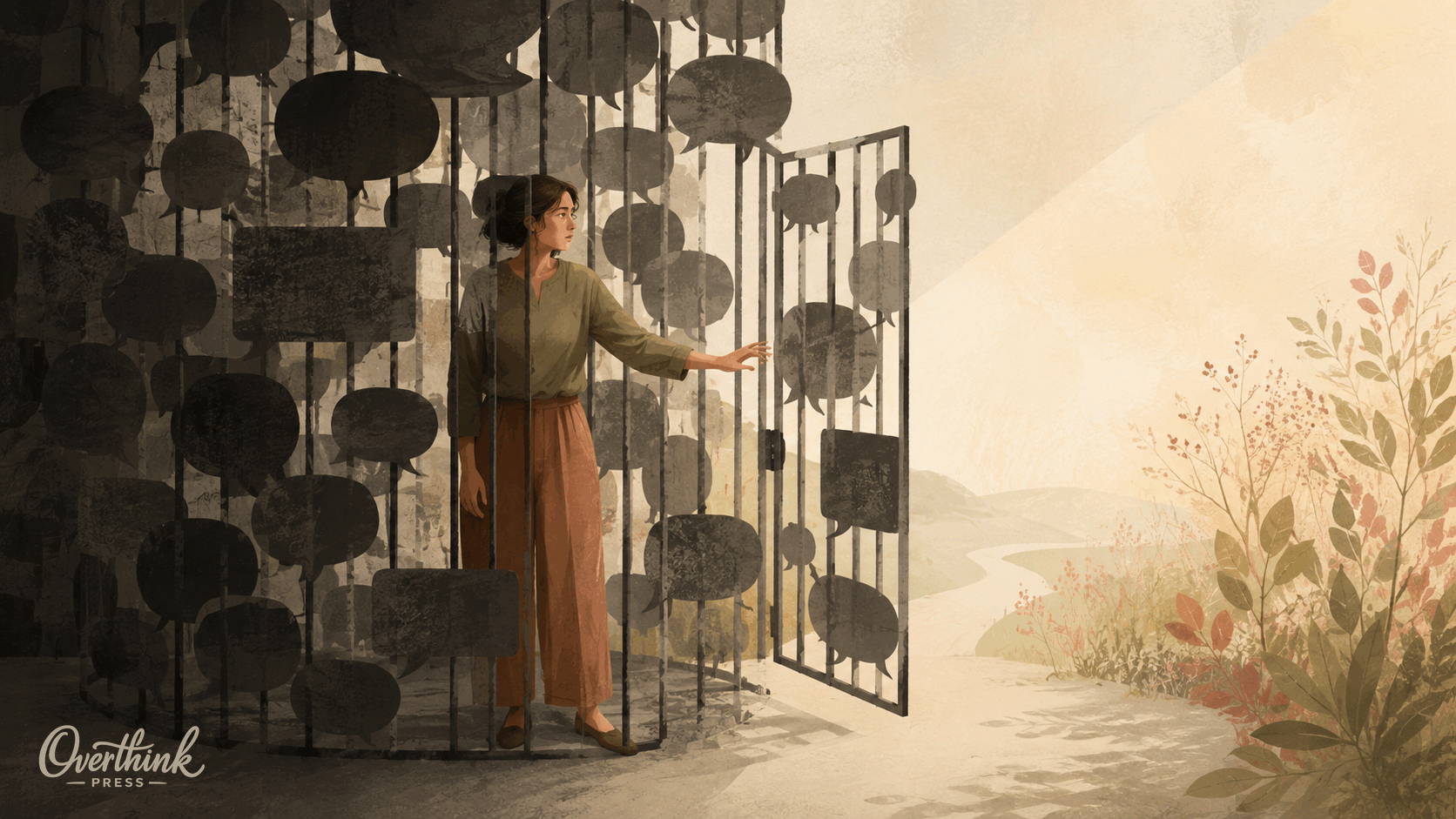
Let us call her Mara.
Mara knew something was wrong long before she admitted it out loud.
Someone had bullied her, harassed her, and crossed boundaries that should never have been crossed. Then came the warning.
Do not tell anyone.
Do not make trouble.
Nobody will believe you.
You will regret it.
The threat worked.
Mara became quiet, but her mind did not.
It replayed everything. Every word. Every look. Every moment when she wondered if she had misunderstood what happened.
She had not.
Still, fear convinced her that silence was the safest option.
So she began living inside an invisible jail.
There were no steel bars. No guards. No dramatic prison uniform that somehow still looks tailored on television.
The jail was inside her decisions.
She stopped going to certain places. She avoided certain people. She changed how she dressed, spoke, walked, and reacted.
She carefully planned her life around the person who had already taken too much from it.
The person was not always present.
The fear was.
Silence Can Be a Survival Response
People often ask why someone did not speak sooner.
Why did you wait? Why did you stay? Why did you not report it? Why did you act normal?
These questions sound logical when you are standing safely outside the situation. Inside it, everything feels different.
Fear can make a person freeze. It can make them doubt their own memory. It can convince them that reporting what happened will cause more harm than remaining silent.
A person may fear losing a job, a relationship, a home, a reputation, a community, or physical safety. They may depend on the person hurting them. They may have already seen what happens when someone else speaks. They may simply be trying to survive the next day.
Silence does not mean nothing happened. Silence does not mean permission was given. Silence does not make the harmed person responsible for the harm.
Sometimes silence is the only response someone can manage until they find a safer one.
Threats Continue the Harm
A threat does not need to sound like something from a crime drama.
Sometimes it is direct: “If you tell anyone, I will hurt you.”
Sometimes it is disguised as advice: “You should think carefully about what this could do to your career.”
Sometimes it arrives wearing a friendly smile: “Nobody needs to know. Let us keep this between us.”
Sometimes it sounds almost reasonable: “Why create a bigger problem?”
Because there is already a problem.
The person who caused it is simply asking you to carry it quietly.
Threats are designed to move the consequences away from the person who did something wrong and place them on the person who might tell the truth.
The person who caused the harm gets to continue life normally. The person who experienced it begins editing their entire existence.
That is not peace. That is control.
Fear Makes the Prison Feel Safer Than the Exit
When you have been threatened, the exit can look more dangerous than the cage.
What if nobody believes me? What if they retaliate? What if I lose everything? What if the situation becomes worse?
These are not foolish questions. Consequences can be real. Retaliation can happen. Systems can fail. People who should help do not always help.
That is why speaking up should not automatically mean confronting the person alone or making one dramatic public announcement.
Courage does not require poor planning.
You are allowed to think carefully, ask for confidential guidance, understand your options, and protect yourself while deciding what comes next.
But there is another question worth asking.
What is continued silence already costing me?
Maybe you are not sleeping. Maybe your body is constantly tense. Maybe you cannot focus. Maybe you feel ashamed even though the shame does not belong to you.
Fear usually shows us the possible cost of acting. It rarely gives an honest presentation about the cost of doing nothing.
Start With the Safest Step
You do not need to solve everything today. You do not need to confront anyone. You do not need to announce your story to the world.
Your first step can be quiet.
Tell one person you trust. Write down what happened while you still remember the details. Record dates, times, locations, witnesses, and exact words when possible.
Save messages, emails, screenshots, photographs, voicemails, and other evidence somewhere the person cannot access. Do not edit or alter the originals.
If you are worried that someone monitors your phone, computer, email, or location, use a safer device before researching help.
Speak with a qualified advocate, therapist, attorney, union representative, school official, human resources representative, or law enforcement professional when appropriate.
If the first person dismisses you, that does not prove your experience was unimportant. It proves you told the wrong person.
Find another door.
You Do Not Owe Anyone a Dangerous Confrontation
There is a popular idea that strength means looking directly at the person who harmed you and delivering a perfect speech.
Real life rarely provides dramatic lighting and a soundtrack.
You do not have to confront someone to prove that you are brave. You do not need their confession. You do not need to watch their face while you explain what they already know they did.
Sometimes the safest choice is distance. Sometimes it is documentation. Sometimes it is a formal report. Sometimes it is leaving first and deciding what to do later. Sometimes it is asking someone else to stand beside you.
The goal is not to create the most impressive moment. The goal is to protect your safety and regain control of your life.
Being Afraid Does Not Mean You Are Weak
Fear is not evidence that you cannot handle the truth. Fear is evidence that your mind understands there may be risk.
Listen to that warning, but do not let it become your permanent address.
You can be terrified and still take one careful step. You can shake while making the call. You can cry while telling someone. You can forget parts of the story and remember them later. You can need help explaining what happened.
Courage is not a personality type reserved for people who speak loudly.
Sometimes courage is saving the message instead of deleting it. Sometimes courage is whispering, “Something happened to me,” to one safe person. Sometimes courage is deciding that fear will no longer make every decision.
The Shame Belongs to the Person Who Caused the Harm
People who bully and harass often rely on shame. They want you to feel embarrassed, wonder what you did to cause it, and worry that people will judge your reaction more harshly than their behavior.
You may ask yourself why you froze, laughed nervously, did not leave, replied politely afterward, or waited so long.
Survival is not always elegant.
People react in complicated ways when they feel threatened. Your response does not erase what happened. You were not required to behave perfectly in order to deserve safety.
The person who crossed the boundary is responsible for crossing it. The person who made the threat is responsible for making it.
That responsibility does not transfer to you simply because fear made you quiet.
Saving Yourself May Look Ordinary
Saving yourself does not always look heroic.
It may look like putting copies of messages in a safe folder, asking a friend to sit beside you during a call, moving your belongings quietly, speaking to an advocate before deciding whether to report, or changing passwords and privacy settings.
It may look like writing one honest sentence: “I am afraid, and I need help.”
That sentence may not feel powerful. It is.
The cage begins to open the moment the secret is no longer controlled entirely by the person who threatened you.
Be More Concerned About What Silence Is Taking
You may be afraid of what happens if you act. That fear deserves respect.
But please also look at what is happening while you remain trapped. Look at your health, your sleep, the way your body reacts when the person enters a room, and how much of your personality you have hidden.
You do not need to rush into danger. You do need to stop pretending that living in constant fear is safe.
There may be no perfect option. There may only be a safer next step.
Take that step with support. Take it carefully. Take it when you can.
But do not let someone convince you that their threat has more authority than your life.
They may have frightened you into silence.
They do not own your voice. They do not own the truth. They do not get to keep the key forever.
This article uses a fictional name and altered circumstances. It does not portray one identifiable person and is not legal or medical advice. If you are in immediate danger, move to a safer location if possible and contact emergency services. Consider speaking privately with a qualified advocate or attorney before taking action when retaliation or violence is a concern.
Overthink Thought
The cage begins to open when the secret is no longer controlled entirely by the person who threatened you.