
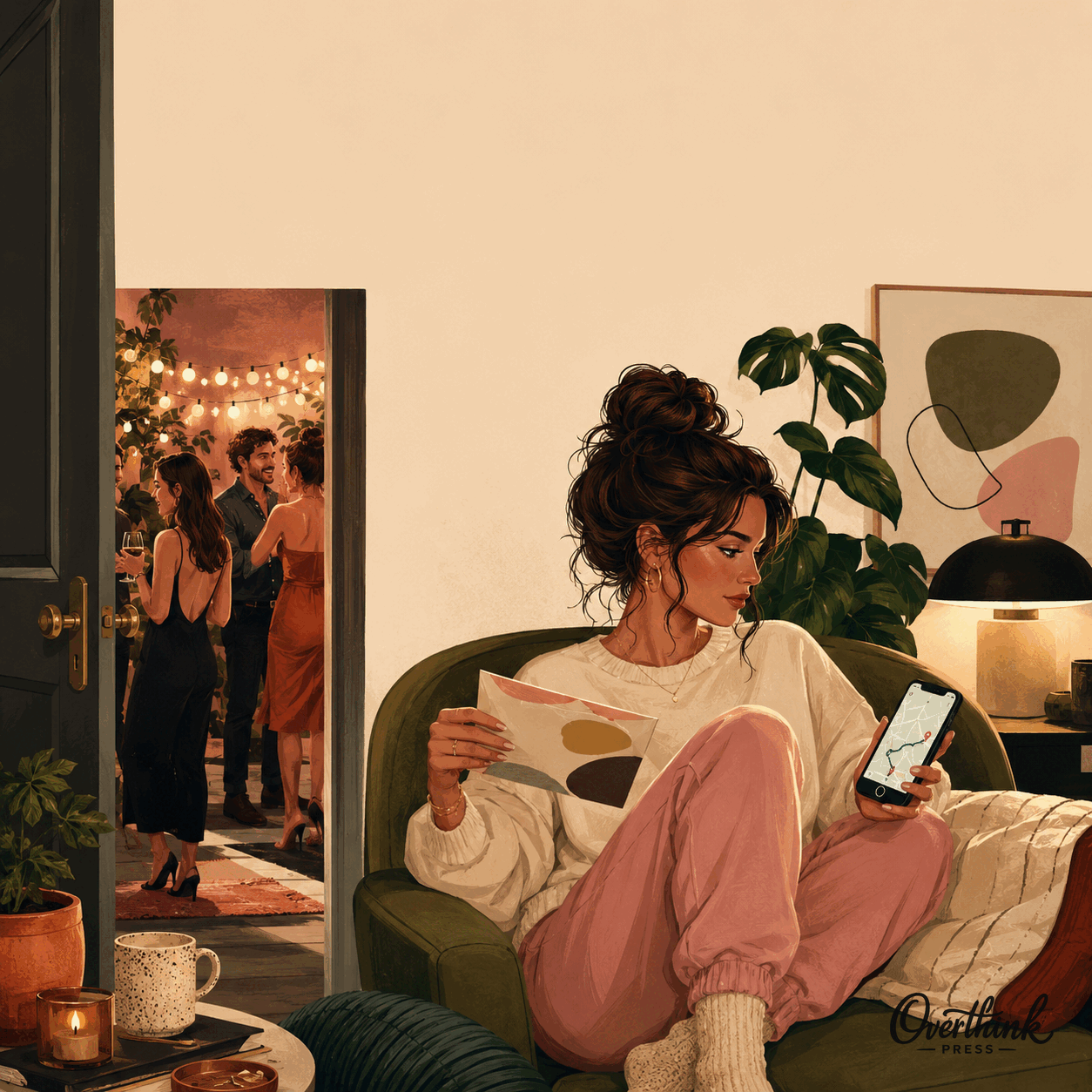
I used to think I had suddenly become an introvert.
Invitations arrived and my first reaction was no longer excitement. It was logistics, escape routes, emotional weather forecasting, and a private estimate of how long I would need to recover afterward.
Apparently, anxiety had completed a full rebrand and forgotten to send me the new identity guidelines.
There is nothing wrong with being introverted. Some people genuinely recharge alone and prefer quieter environments. But anxiety can imitate introversion by making connection feel expensive.
You do not avoid the party because you dislike everyone. You avoid it because your brain has already imagined arriving awkwardly, saying something strange, being judged, becoming trapped in a conversation, and leaving at the exact moment everyone notices.
By the time the event begins, your nervous system has attended it three times.
The problem is that avoidance brings immediate relief. You cancel, your body relaxes, and your brain proudly announces that staying home prevented disaster. It does not mention that the disaster was theoretical.
Then isolation slowly becomes familiar. You miss people but feel rusty around them. The rust makes socializing harder, which makes staying home look even wiser. Anxiety loves a closed loop with excellent lighting.
The answer is not forcing yourself to become the loudest person in every room. It may mean smaller plans, shorter visits, one trusted friend, your own transportation, or permission to leave before your social battery files a formal complaint.
You are allowed to enjoy solitude. You are also allowed to question whether fear has been making all your social decisions.
Grounding thought: Needing quiet is valid. Hiding because anxiety promised that every room is dangerous is something else. You can return to people slowly.